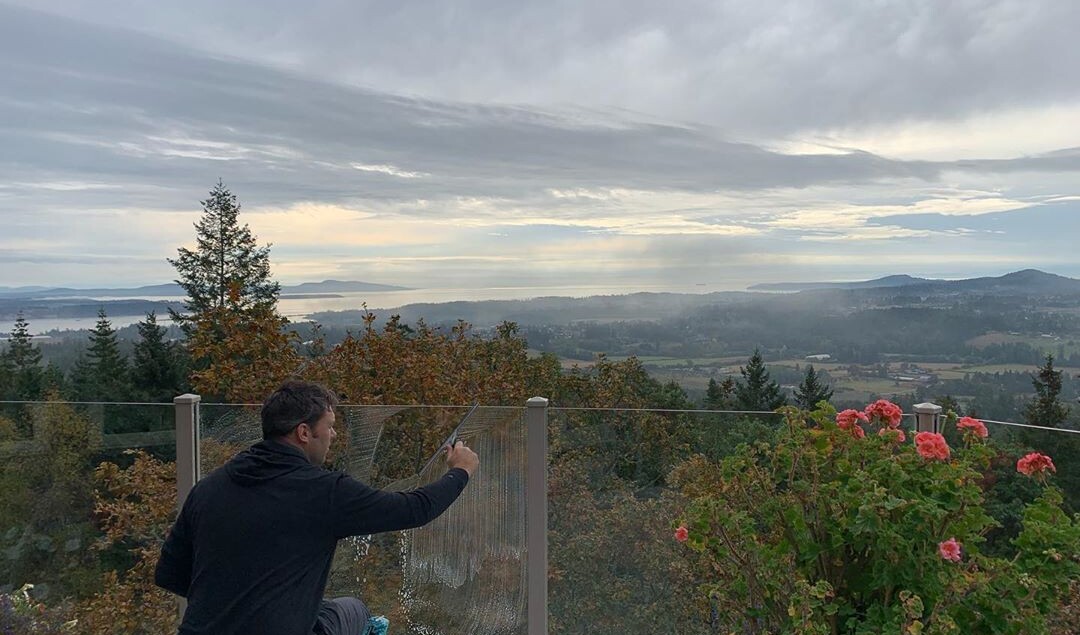
How to Remove Hard Water Spots From Windows in Victoria BC
Hard water spots and window stains are among the most frustrating problems for homeowners in Victoria, BC. You clean the glass, it looks better for a day, and then the white marks return. Coastal salt film, mineral-rich tap water, and regular winter rainfall combine to make window spotting a common issue on Vancouver Island.
Victoria receives close to 900 millimetres of rainfall each year, most of it between October and March. Frequent wetting and drying cycles leave behind mineral deposits on exterior glass. Without the right method, wiping the windows can actually grind grit into the surface and make the problem worse.
This guide from our Victoria window cleaning experts explains how to safely remove hard water spots, how to distinguish between stains and permanent damage, and how to prevent the marks from recurring. If you prefer to skip the trial and error, Chadam Cleaning offers professional window cleaning in Victoria, BC, with a free quote.
Hard Water Spots, Salt Film, and Etching Are Not the Same
Many websites treat all window stains as one problem. In Victoria, there are three distinct issues, each requiring a different approach.
Hard Water Spots
These are mineral residues left when tap water or sprinkler water evaporates. Calcium and magnesium compounds remain on the glass as white dots or cloudy patches. They usually feel slightly rough to the touch.
Coastal Salt Film
Homes near the Strait of Juan de Fuca and exposed suburbs such as Fairfield, James Bay, and Cordova Bay often develop a fine salty haze. This film can trap tiny grains of sand and road dust. If you wipe the glass dry before rinsing, those particles can create light scratches.
Etching
If the window looks cloudy even when wet, the surface may be etched. Etching occurs when minerals remain on the glass for an extended period and slowly react with it. Etched glass cannot be cleaned away and requires professional polishing or replacement.
Quick test
If the mark disappears when the glass is wet and returns when dry, it is residue and can be removed.
If the haze remains visible while wet, it is likely etched and needs restoration.
The Safest Method to Remove Hard Water Spots
This method works on most Victoria homes and avoids scratching.
Rinse First
Always rinse the glass with clean water before touching it. This removes salt grit and loose dirt that could be dragged across the surface.Apply a Mild Acid Solution
White vinegar or a citric acid mix softens mineral deposits. Spray the solution generously and keep the surface wet for several minutes. Do not allow it to dry on the glass. There are professional glass restorer products to ensure expert results.Agitate Gently
Use a soft microfibre cloth or non-scratch pad to loosen the softened minerals. Avoid abrasive powders and harsh scrubbers.Rinse Thoroughly
Rinse again with clean water to remove any residual dissolved matter. Skipping this step is the main reason spots return.Dry the Edges and Frames
Most streaks start from dirty frames and seals. Wipe the edges with a clean cloth before using a squeegee on the glass.
If the marks do not improve after two careful attempts, the issue may be salt film mixed with grit or early etching. In that case, professional cleaning is the safest option.
How often should you clean your windows? - Read our guide today!
Victoria Specific Problem: Salt Film From Coastal Air
Window stains in Victoria are often not pure hard water. Sea spray travels surprisingly far inland and leaves a thin salty layer on glass. When that film mixes with traffic dust and pollen, it becomes difficult to remove.
Important difference
Hard water residue is soft and chalky.
Salt film often contains microscopic grit.
This is why dry-wiping exterior windows can cause fine scratches. Professional window cleaners always rinse first and use controlled tools to lift the film safely. Gutters that overflow can stain windows, read about gutter cleaning in Victoria BC to see how we can help.
What Not to Do
Do not scrub with abrasive powders or steel wool. These can permanently scratch the glass.
Do not use a razor blade on dry or gritty windows.
Do not clean in direct sunlight when the solution dries too fast.
Do not rinse with tap water and walk away. Minerals in the rinse water will leave new spots.
When DIY Will Not Work
Some windows need more than household methods.
Signs you need professional help
The haze stays visible while the glass is wet
The surface feels smooth but looks cloudy
Spots return within days, even after careful cleaning
Previous owners ignored the problem for years
In these cases, the glass may be lightly etched. Chadam Cleaning can assess whether specialist polishing will restore clarity or whether replacement is more sensible.
How to Stop Spots Coming Back in Victoria
Prevention is easier than constant scrubbing.
Squeegee exterior glass after heavy rain events
Redirect garden sprinklers away from windows
Clean frames and sills at the same time as the glass
Schedule regular professional window cleaning using purified water that dries spot-free
Treat the nearby roof moss so that organic runoff does not mix with minerals
Homes close to the ocean or busy roads benefit from more frequent exterior cleaning, particularly after winter storms. See our window cleaning in Saanich services to see how we can help your home or commercial property.
Free Quote for Professional Window Cleaning in Victoria
Removing hard water spots can be time-consuming and risky if the glass is already sensitive. Chadam Cleaning provides safe exterior window cleaning in Victoria and Saanich using methods designed for coastal conditions.
We can:
Assess whether marks are residue or etching
Remove mineral deposits without scratching
Clean frames and tracks to prevent recontamination
Maintain windows on a schedule that suits your location
Get a free quote today and enjoy clear, streak-free windows without the guesswork.
Frequently Asked Questions
Can vinegar remove hard water spots on windows?
Yes, vinegar can soften mineral deposits and is a good first step. The glass must be rinsed before and after application to prevent grit from being dragged across the surface.
Is salt film different from hard water stains?
Yes. Salt film comes from coastal air and often contains fine particles. It requires a careful rinse before any wiping to prevent scratches.
Why do spots come back after rain in Victoria?
Rainwater and sprinkler water leave minerals behind as they evaporate. Without purified water or proper drying, new spots form quickly.
Will professional window cleaning remove hard water stains?
Most residue can be removed with the right technique. If the glass is etched, professional polishing may be required.
What is the safest way to avoid scratching glass?
Always rinse first, use soft cloths, and avoid abrasive tools. Professional cleaners use controlled methods designed for coastal conditions.